Redpoll (Acanthis flammea)
category: CONSERVATIONGENERALURBAN BIRD CALL
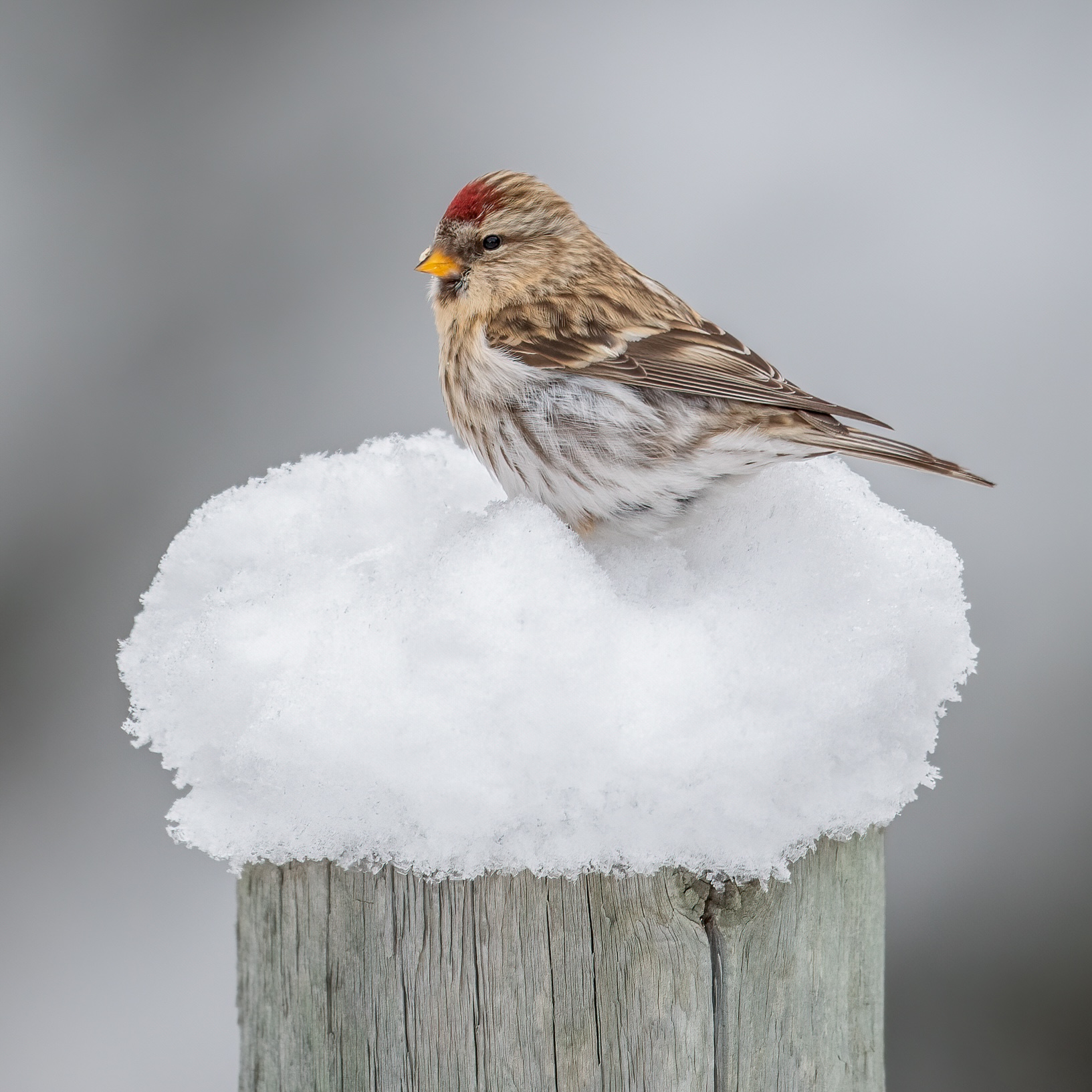
Common Redpoll. Photo by airboy123/Flickr CC.
By Don Riepe, NYC Bird Alliance Advisory Council Member and Former Board Member | April 2, 2026
By Don Riepe, NYC Bird Alliance Advisory Council Member and Former Board Member | April 2, 2026
One of the great birding highlights of the cold season in New York City is the possible arrival of winter finches – a suite of species including Pine Siskins, Purple Finches, Red and White Crossbills, Evening and Pine Grosbeaks, and Redpolls.
The Common Redpoll (Acanthis flammea) is now known as just Redpoll, as the Hoary Redpoll and Lesser Redpoll have been listed as subspecies. The Redpoll is a small, lively finch with streaked brown plumage, a distinctive red cap on its crown (or poll), and black chin markings. Males usually display a rosy blush on their chests, adding to their beauty.
Highly adaptable, these sparrow-like birds survive in cold climates and are often seen foraging for seeds, especially from birch and alder trees. They can be found in a variety of habitats, including boreal forests, tundra, scrublands, and even suburban areas during winter migrations. While Redpolls are uncommon local visitors, occasional migratory irruptions caused by poor seed crops further north cause Redpolls to move southward in search of food.
Redpolls are classic irruptive species and their movements are a direct survival strategy. Research, such as that synthesized by the Finch Research Network (FiRN), confirms that irruptions are primarily a response to food scarcity. When cone and birch seed crops fail across Canada's vast taiga, these nomadic birds surge southward in search of sustenance, sometimes in massive numbers. A 2020 study in The Auk: Ornithological Advances analyzing over two decades of data from Project FeederWatch found that Redpoll sightings at feeders in the U.S. were strongly negatively correlated with cone crop abundance in the boreal region. The scarcer the food "up north," the farther south the birds appear.
This past fall, one such Redpoll, arriving in Manhattan to forage, met an unfortunate but not uncommon end. In November, one of our Project Safe Flight volunteer collision monitors found a dead Redpoll, a victim of a window collision. This Redpoll, photographed below, is the first to be found by our volunteers in over 25 years.

you can help reduce collisions
This spring migration, as we admire the finches, warblers, and vireos passing through our city, it’s critical that we also work together to reduce collision hazards. As NYC Bird Alliance conducts scientific research and advocates for bird-friendly legislation, remember that you can help save birds too! Join us in taking advocacy action, make your windows bird-safe, and turn lights out at night to reduce artificial light and keep our beautiful migrants on track.