Piping Plover (Charadrius melodus)
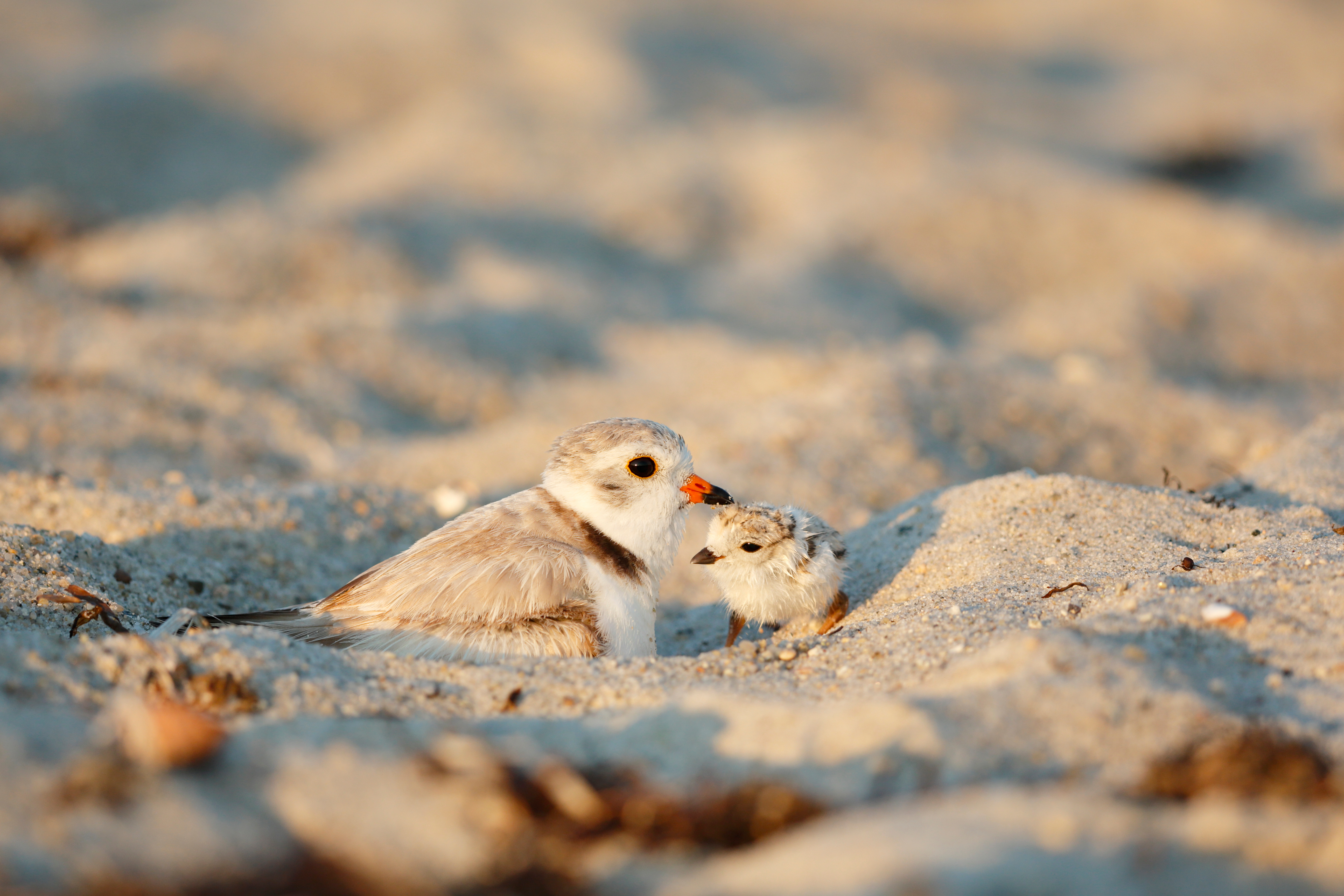
Piping Plover / Paul Tessier
By Olivia Liang, Senior Associate, Marketing and Communications | June 18, 2026
If you’ve ever visited the Rockaways, you may have noticed some local cele-bird-ies. They’re stocky, stubby-billed, and big-eyed with legs that dart so quickly they appear to vibrate.
By Olivia Liang, Senior Associate, Marketing and Communications | June 18, 2026
If you’ve ever visited the Rockaways, you may have noticed some local cele-bird-ies. They’re stocky, stubby-billed, and big-eyed with legs that dart so quickly they appear to vibrate.
The Piping Plover (Charadrius melodus) is a sandy grayish bird with white underparts and a narrow, black collar that breaks and fades to gray in the nonbreeding season. Arriving to our shores in mid-March and staying through August, these plovers can be nearly invisible on the beach, as can the shallow pits they make for nests, sometimes lined with pebbles and shells. Spanning Breezy Point to Far Rockaway, about 100 Piping Plovers have nested in New York City in recent years.
Plovers are a beloved species to many New Yorkers, and they are in need of our help. Once hunted for their feathers, the 1918 Migratory Bird Treaty Act supported their recovery, but these sensitive shorebirds once again face decline due to coastal development, disturbance, and threats to weaken the Endangered Species Act. Now listed as Endangered in New York State and Federally Threatened, these tiny shorebirds rely on the coordinated efforts of National Park Service, NYC Department of Parks, and NYC Plover Project – all working to educate and engage beachgoers on how to enjoy the coast without disturbing these small shorebirds with a big conservation history.
NYC Bird Alliance’s outreach team has been heartened by our recent engagement with members of the Edgemere and greater Rockaway community, who live along the Rockaway Beach Endangered Species Nesting Area (RBESNA). Each summer, this one-mile stretch of beach transforms into protected nesting grounds for five species of state and federally threatened and endangered species, including Piping Plover, American Oystercatcher, and Least Terns. For a community that has navigated years of systemic divestment, the seasonal closure of RBESNA represents a major loss of beach access. As our work is rooted in the principle that conservation is most effective when it is inclusive, we’re working with on-the-ground community organizations and engaging Edgemere residents so they are part of the long term conservation success for this site.
Whether you’re a Rockaway resident or summer visitor, remember to Share the Shore this summer by respecting fencing, keeping your distance, cleaning up trash, and keeping dogs off the beaches beginning in May.
This article was originally published in the Summer 2026 issue of The Urban Bird Call.