Evolving Attitudes: Native Plants in the Urban Landscape
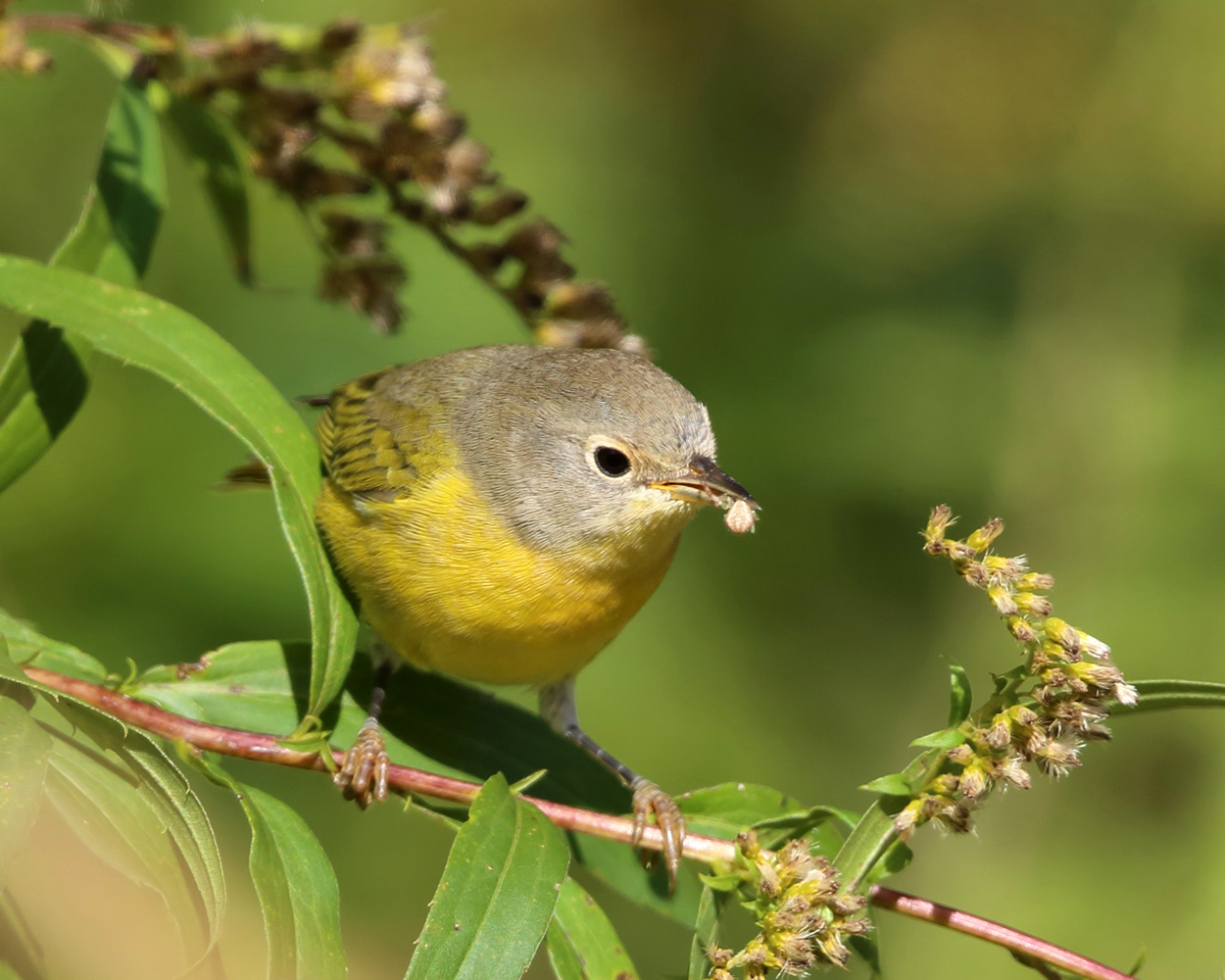
A Nashville Warbler eats a spider found on the native plant species Goldenrod ⓒ Tom Murray/CC
By Hillarie O’Toole, Publications Committee | August 27, 2026
Another whirlwind spring and summer has come and gone. As a gardener, I spent many days listening to the songs of the migrating warblers shimmering in the tree canopy across the street as I worked on tidying the apartment building foundation plants in my northern Manhattan neighborhood. As I toiled away pruning several species of shrubs that were planted prior to their often “banned” status due to their overly aggressive and even invasive tendencies, I started to envision a new approach to my neighborhood landscape.
The plant question
It isn’t news to most readers that “native plants,” those which have evolved over millennia within a region alongside localized birds, insects, and mammals, provide unique and often highly specialized resources and benefits to the ecosystem. Not only do they provide food in the form of seeds, but they are hosts to insects upon which birds feed, and often provide important shelter from predators and weather in our too often barren cityscape. In part, thanks to NYC Local Law 11, it isn’t surprising to see that our city parks and public gardens have been championing native plantings for many years now, such as the designs featured at the High Line, New York Botanical Garden’s Native Plant Garden, The Battery, Brooklyn Bridge Park, and Governors Island, to name a few.
Why then, do we continue to see rows of boxwoods, euonymus, barberry, and yews lining our city streets? With a little research and a dash of tenacity, everyday New Yorkers can make a significant impact for local wildlife by advocating for native plants in residential, business, and community garden spaces.
Local plants: Local Wildlife
I recently connected with Uli Lorimer, Director of Horticulture at the Native Plant Trust, a Massachusetts-based plant conservation organization dedicated to promoting native plants of the Northeast, to discuss the role that native plants have for local wildlife.
Why is it important to include native plants in our designed landscapes?
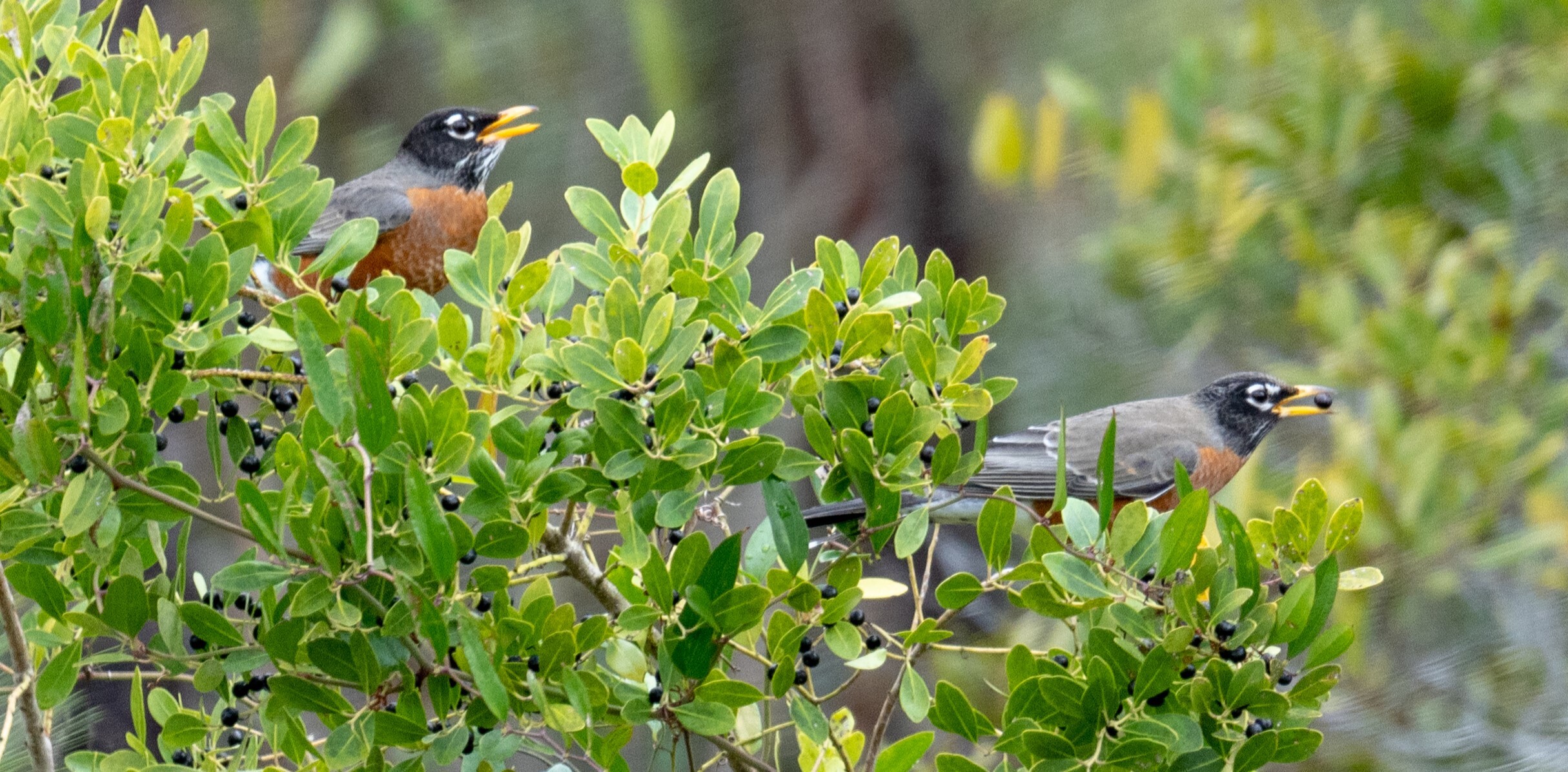
Are all berries created equal? Colorful fruit on shrubs and trees will certainly attract wildlife, but the story isn't quite as straightforward. Studies have shown that the fruits and berries from native shrubs like viburnums, spicebush, winterberry, and dogwoods contain high levels of fat and calories. Birds will seek out the food that provides them with the most energy and protein ahead of stressful winter periods. Unfortunately, when native food resources are scarce, birds turn to ecologically harmful plants for food, thereby furthering the vicious cycle of seed dispersal and harm. Planting native fruit-bearing shrubs, especially in urban areas, provides needed resources for wildlife and helps reduce the spread of harmful plants.
How has public awareness and nursery availability for locally evolved plants changed in recent years?
Gardening for biodiversity has become a leading theme in recent years as the public wrestles with the effects of climate change, habitat loss, and degradation. Making intentional choices to welcome more wildlife and less tidiness in our green spaces benefits humans immensely by lowering stress levels, fostering deeper connections with nature, and supporting the inherent hope of a verdant future world.
We are witnessing a shift in worldview as well, given that younger generations have grown up with nature's losses as their baseline, whereas older generations have experienced the decline. Both groups clearly care deeply for the future of our planet and are enthusiastically embracing a new way of making gardens and greener public spaces. The horticulture industry has noticed this shift too, and with the increasing availability of native plants in the marketplace, it is well poised to offer the plant material needed as we collectively strive towards that brighter and wilder future.
If any of this information has piqued your interest, you might now be wondering how you can advocate to include more native plants in your “neck of the woods,” especially if you don’t have a private yard or green space. I encourage you to think about the places you frequent: home, work, shops, restaurants, and your local sidewalk, including apartment foundation plantings, tree pits, and containers. Many city offices also have green spaces in surprising places, such as rooftops and courtyards. Community gardens are another fantastic place to connect with people and invest in the overall wellbeing and beauty of your city. Once you’ve narrowed in on a location, you can then reach out to that space’s management, boards and/or committees. Often the folks who oversee the planting selections are just going with what they already know or what a landscape company is trying to sell them, and they may not be aware of locally evolved alternatives that, in the long run, often perform better than the non-native plants.
As they say, “if you build it, they will come.”
LOCAL ALTERNATIVES FOR COMMONLY-PLANTED NON-NATIVE SHRUBS
For hedges:
- Instead of boxwood (Buxus spp.) which is frequently prone to many diseases and pests, consider the Inkberry Holly (Ilex glabra), which is known to tolerate urban conditions and drought. Inkberry shrubs produce dark fruits which feed birds and also serve as a larval host plant for several native moths and butterflies.
- Instead of Euonymus varieties, many of which are listed as invasive, consider the Northern Bayberry (Morella pensylvanica), which is very adaptable to urban conditions, serves as larval host to the Columbia silkmoth, and its winter berries are a fatty winter food source for birds.
For shrubs with fantastic fall color:
- Instead of invasive Barberry (Berberis thunbergii), consider Virginia Sweetspire (Itea virginica). Virginia sweetspire has phenomenal white flowers in late spring that serve as an early pollen source for insects and hummingbirds. The dried seedheads serve as a food source for migrating birds in the fall, and the autumn color is an absolute stunner: deep reds and purples with leaves that linger often into late fall and early winter.
For flowering shrubs:
- Instead of Bigleaf Hydrangea (Hydrangea macrophylla), which is prone to winter damage, and summer heat stress, consider Oakleaf Hydrangea (Hydrangea quercifolia). The Oakleaf hydrangea is highly adaptable to urban conditions, and its fertile florets provide important pollen and nectar to insects.
These are but a few suggestions! Ultimately, garden success is all about planting the “right plant in the right place.” Finding that balance is a tricky and nuanced business, but one that is worth the effort. As our knowledge evolves, and our climate shifts, so too must we adapt our designs to better serve wildlife and our own wellbeing.
Digging even deeper
Here are several amazing resources available to you, should you wish to “dig deeper” into the world of locally evolved plants:
For information about plant native range, habitat, and wildlife supported:
For information about plant native range, habitat, and wildlife supported:
For information about keystone plants by ecoregion and/or plant characteristics:
Books:
- The Northeast Native Plant Primer by Uli Lorimer
- Nature’s Best Hope by Douglas Tallamy
- Native Plants of the Northeast: A Guide for Gardening and Conservation by Donald J. Leopold
About the author: Hillarie O’Toole is a longtime contributor to the Urban Bird Call and a fulltime horticulturist at Wave Hill, a public garden in the Bronx, NY. She is currently restoring and redesigning the Elliptical Garden, which is a formal, ornamental, native plant garden at Wave Hill.
About Uli Lorimer: Uli Lorimer is Director of Horticulture at the Native Plant Trust, an alumni of Wave Hill’s John Nally Horticulture Internship program, and author of the best-selling regional guidebook, The Northeast Native Plant Primer.