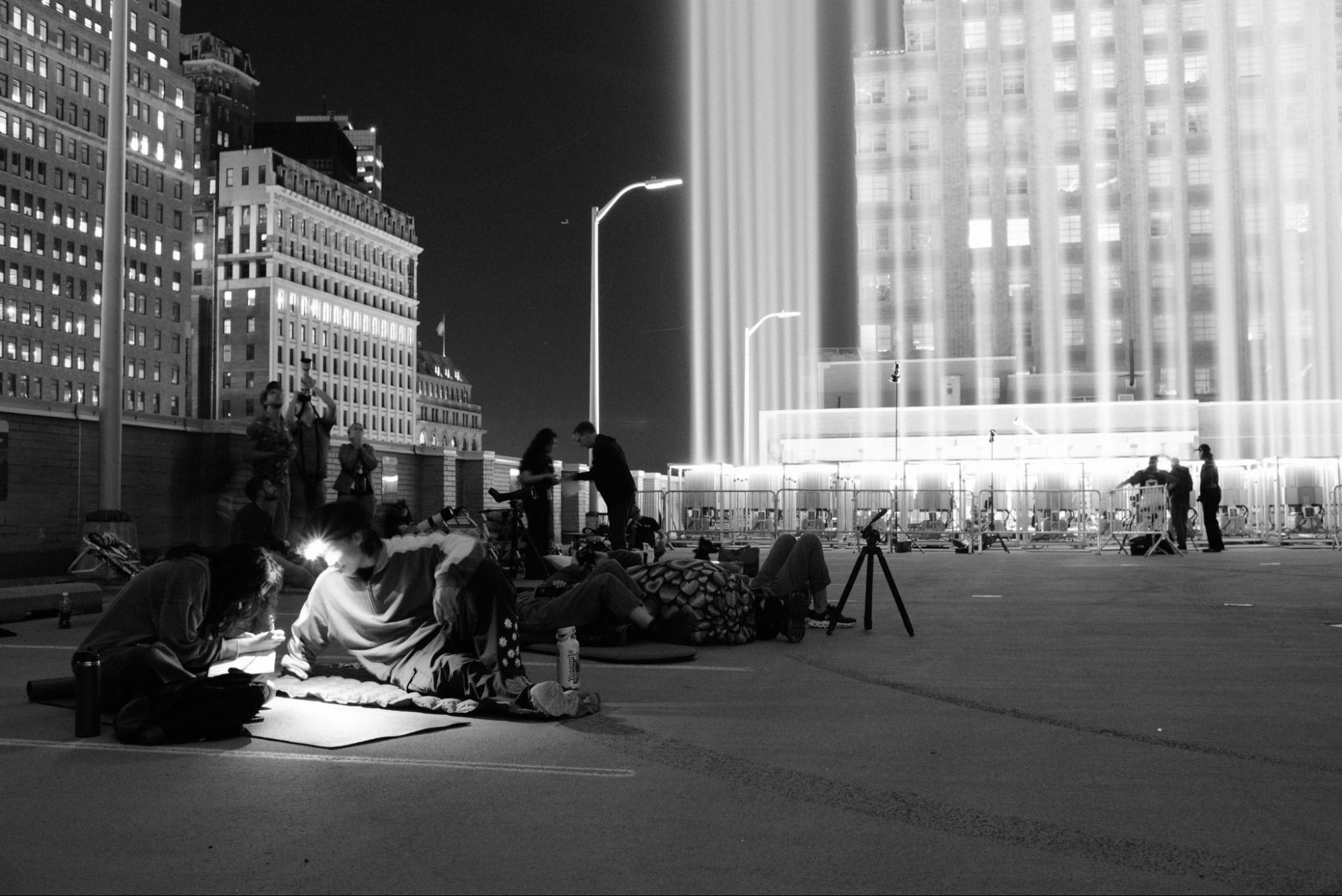
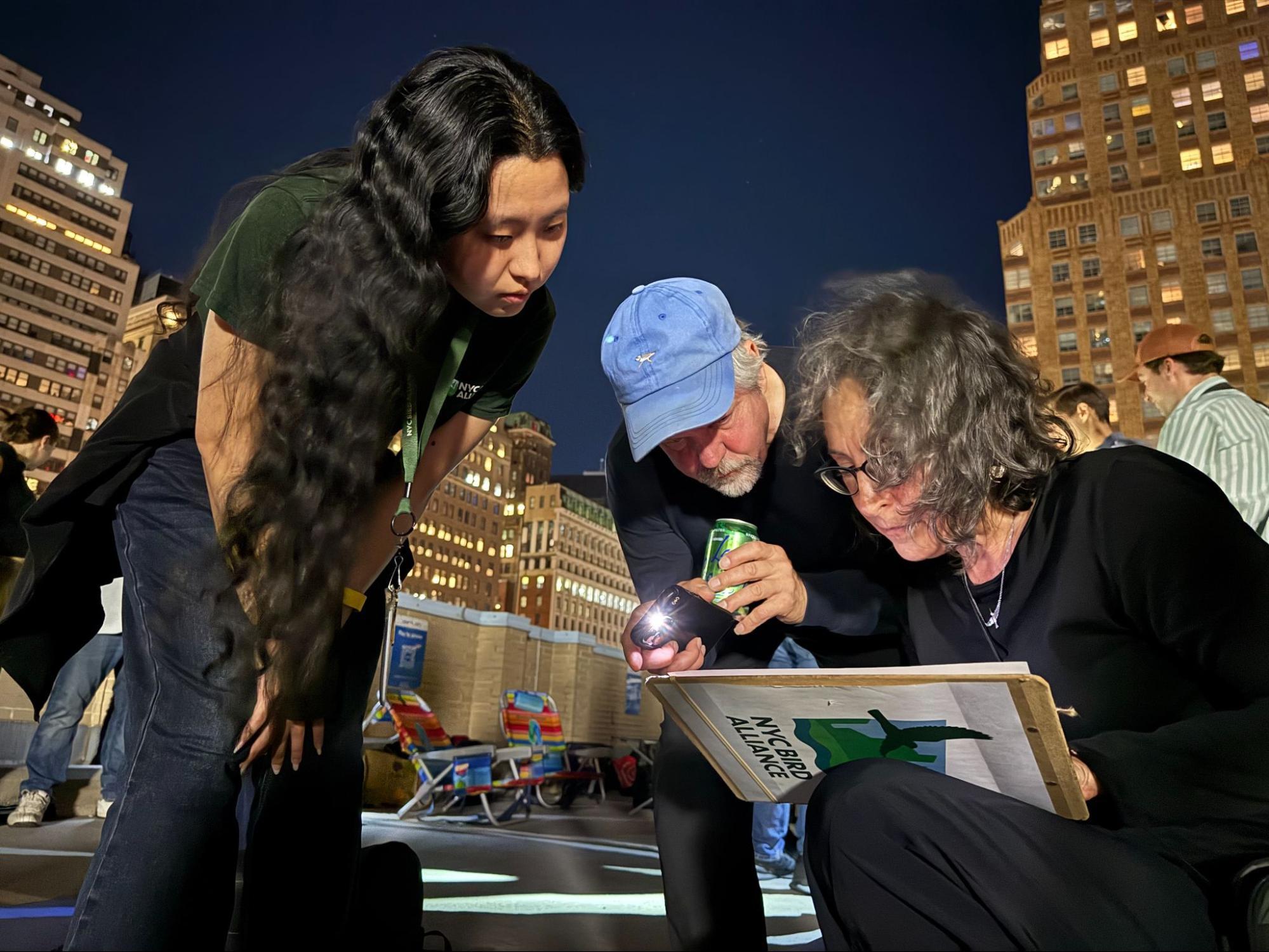
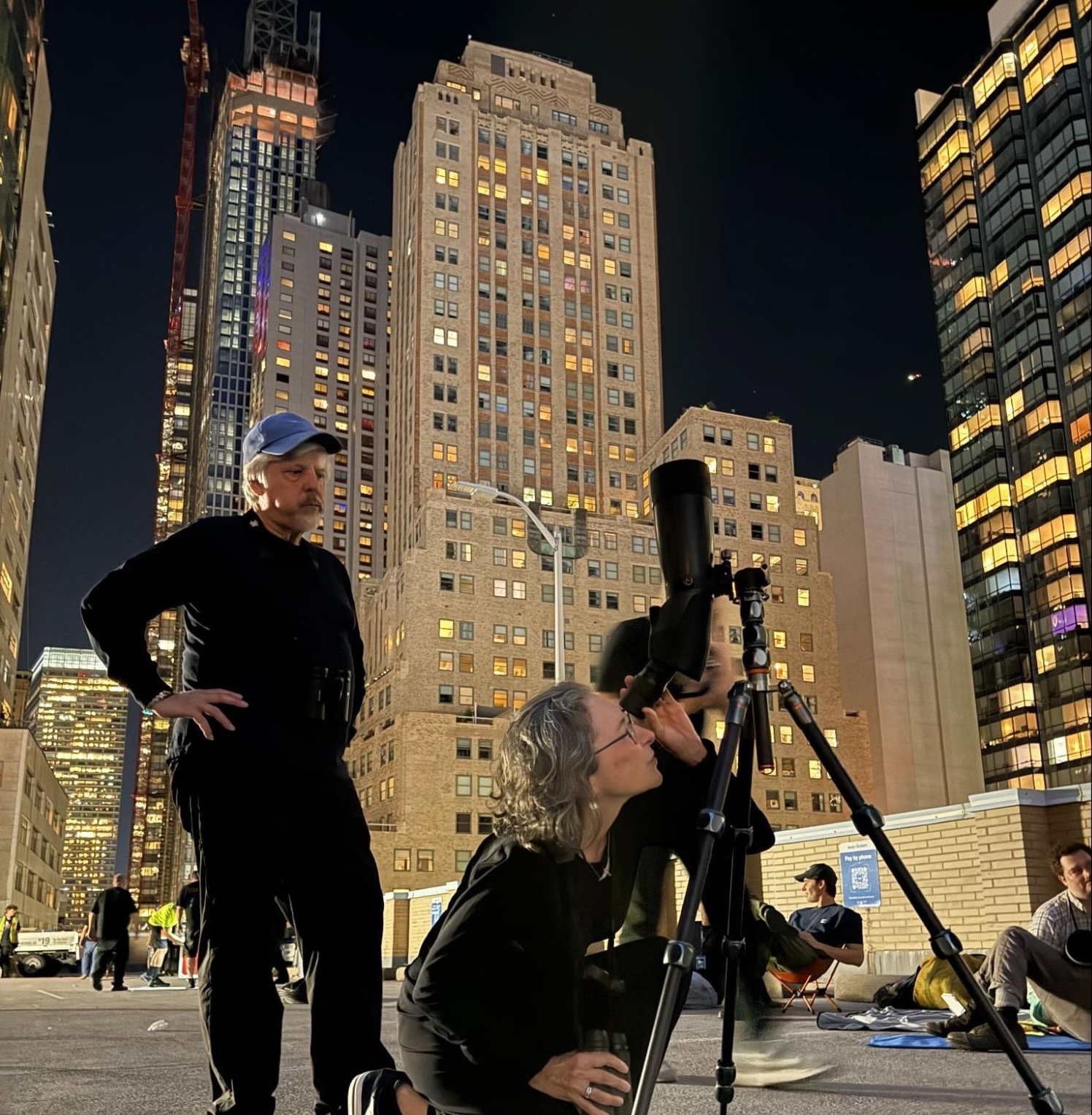
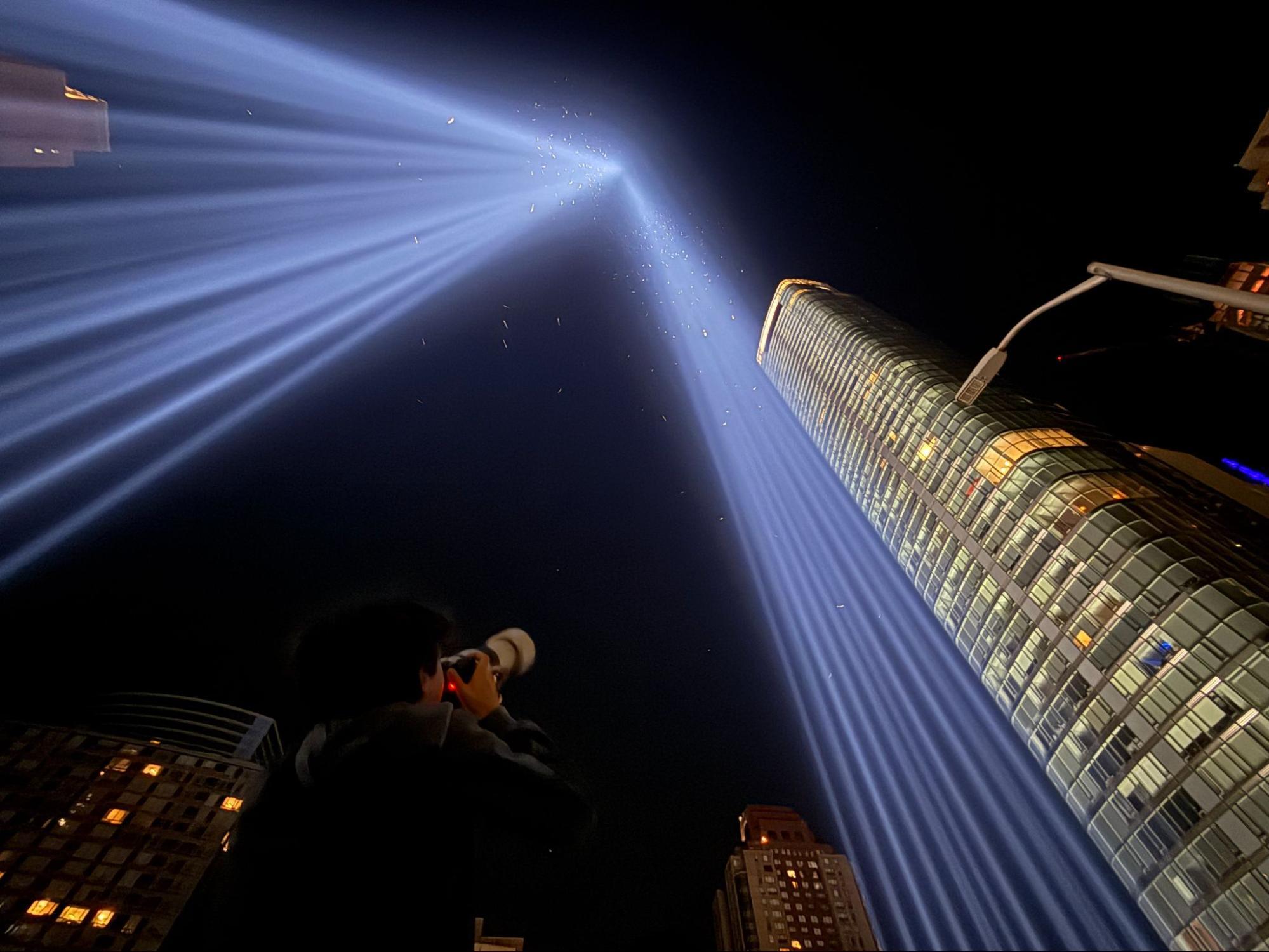
NYC Bird Alliance scientists, partners, and volunteers camp at the base of the Tribute from 8pm–6am, monitoring bird activity to ensure safe passage for migrating species. ⓒ Tim Seguin
By Olivia Liang, Senior Associate, Marketing and Communications | September 30, 2026
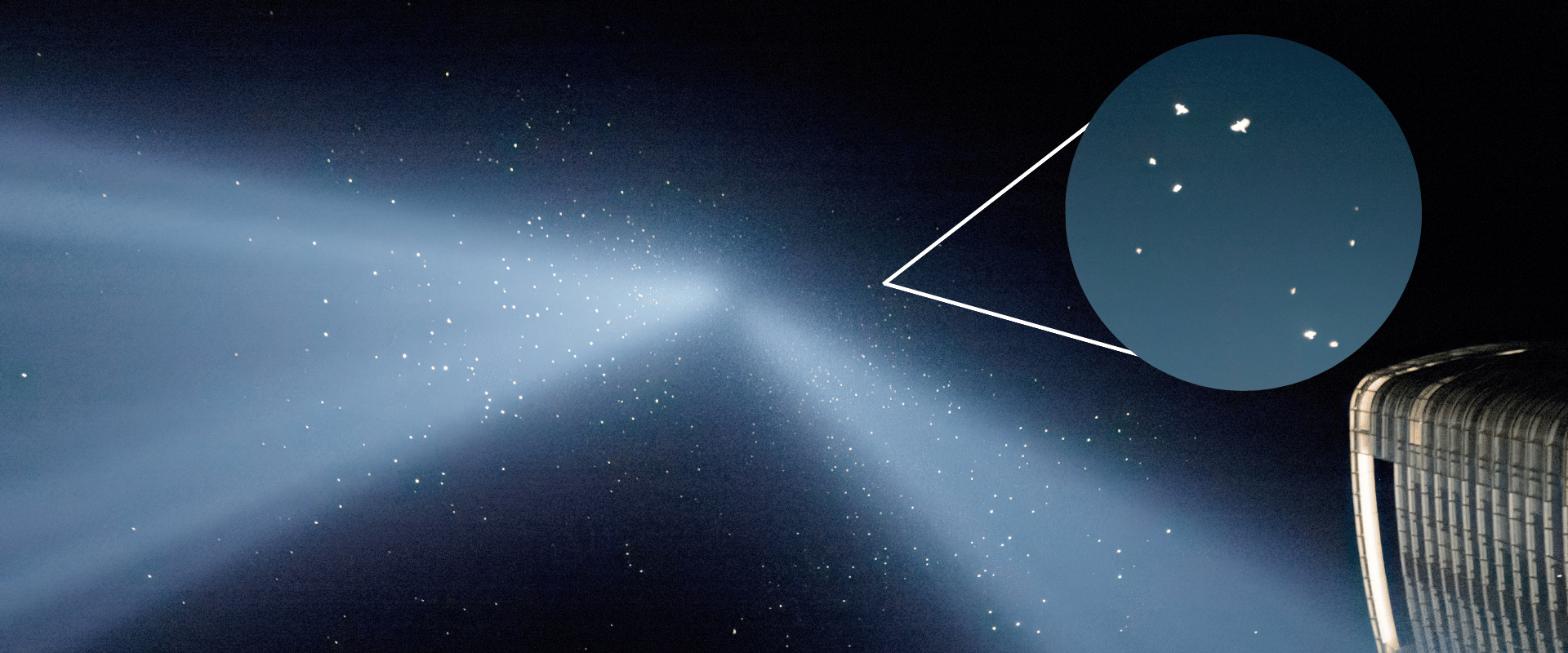
Each year, on the night of September 11, people across all five boroughs – and beyond – can see the powerful twin beams of the 9/11 Tribute in Light Memorial. But unless you’re in downtown Manhattan, it’s unlikely you’ve seen the tiny white specks circling within the lights.
Since 2002, NYC Bird Alliance has monitored the 9/11 Tribute in Light Memorial to protect what few can see: the migratory birds flying in, around, and through the beams.
Powerful light displays, like the Tribute, can attract birds – in this case drawing them into the illuminated beams where they can circle endlessly until exhausted. In this disoriented state, it’s more likely the migratory species would collide with buildings and glass facades, adding to the overall toll of bird collisions, which kill a quarter of a million birds in New York City every year. However, our scientists monitor the memorial throughout the night, working with the Tribute organizers to briefly power down the lights when needed. This fieldwork not only saves thousands of birds, but also fuels our ongoing research into artificial light's impact on wildlife, providing the scientific backbone for our advocacy to pass stronger Lights Out legislation.
As New Yorkers, the Tribute in Light is a truly moving and iconic display, and we’re honored to return each year to ensure it is safe for migrating birds while memorializing those we lost 25 years ago. This partnership with 9/11 Memorial & Museum and Michael Ahern Production Services is a shining example of how conservation thrives when we work together, prioritizing the wellbeing of both people and wildlife.
This year, NYC Bird Alliance’s scientists, staff, and nearly 25 volunteers returned to the base of the Tribute, monitoring the display from 8pm – 6am. With scopes, binoculars, and fully extended camera lenses in hand, our volunteers counted the number of birds circling within the beams every 20 minutes. When monitors estimated there were over 1,000 birds circling above, we worked with the Tribute organizers to briefly power down the display.
While the last couple years of monitoring have brought relatively low bird activity, wherein we only needed to pause the display once or twice, this year was a long and busy night.
A RECORD-TYING NIGHT
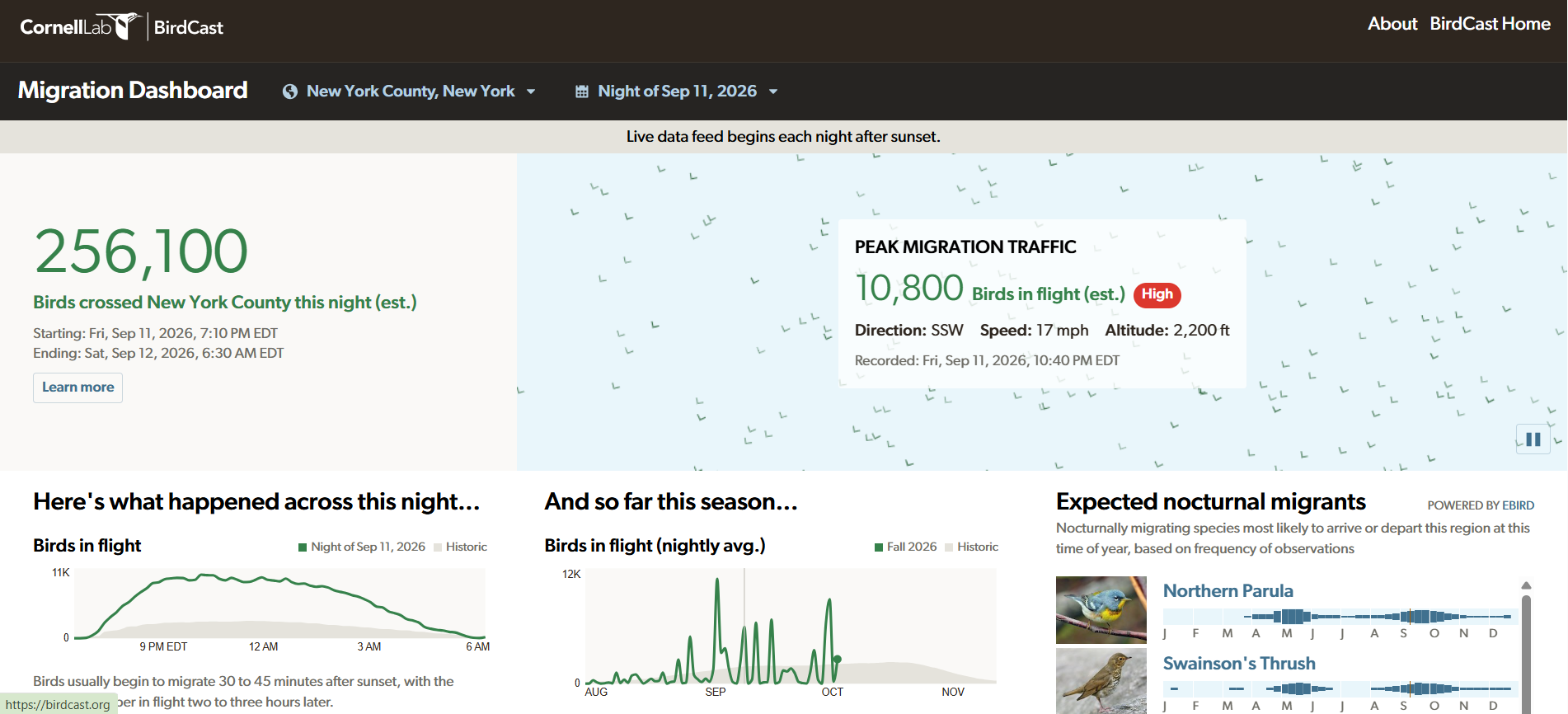
BirdCast radar showed that a quarter million birds migrated over New York county on the night of September 11, 2026. The high migration numbers ensured a constant stream of birds drawn to the beams throughout the night, so much so that our scientists could hear the bird calls throughout the night from the base of the Tribute.
Tying a record set in 2015, we shut down the lights a total of eight times throughout the night. The first shut-off occurred at 9:32pm, repeating about once an hour until the last shut-off at 4:01am. The Tribute display was permanently powered down for the evening after dawn broke.
In previous years when the Tribute was briefly paused to allow migratory birds to “escape” the powerful beams, thermal imaging showed that nearly all the birds quickly dispersed and continued on their journeys. However, this year, our scientists heard and observed many birds continuing to remain in the area even after the lights were shut off, only to re-enter the beams once they were turned on again.
The reason for this behavior is being explored by our scientists, though an initial theory involves the state of the night sky combined with a brightly lit city. The Tribute took place on a moonless night (the same as 2015), with high migration and low winds. The lack of moonlight, combined with the consistent and bright wattage of the city, a typical scene in lower Manhattan, was likely the culprit for birds remaining in the area rather than continuing south.
“The Tribute shines a spotlight on the power of light pollution. This one event is easy to focus on, but this year the birds reminded us of how unnecessarily bright our city is, even when most of us are sleeping,” reported Dr. Dustin Partridge, NYC Bird Alliance’s Senior Director of Conservation and Science.
“By briefly pausing the display, we protected the birds caught in the beams. But to then see them fly directly toward brightly lit but completely empty office buildings… it was a clear sign that city-wide change is needed.”
REDUCING THE CITY’S LIGHT POLLUTION
Millions of birds pass through New York City each spring and fall migration, relying on natural light cues (like the stars and moon) for navigation, communication, and reproduction. Artificial light pollution disturbs these cues, reorienting birds' pathways and drawing them into our dangerous urban environment.
According to the Light Pollution Map, which uses satellite input to calculate the relative brightness of any given area, New York City ranks 9 out of 9 on the Bortle Scale, a sky-brightness scale used by astronomers and stargazers. While our scientists at NYC Bird Alliance are able to make large, occasional light displays like the Tribute in Light or drone shows safer for birds, our city produces an enormous amount of artificial light just from unoccupied buildings each night. Reducing this baseline wattage is a critical step in making the City safer for birds.
Currently, NYC Bird Alliance is championing a new Lights Out bill (Intro 0998 [Epstein]), which would reduce unnecessary nighttime lighting in commercial and office buildings during migration seasons. This legislation, once passed, will reduce fatal collisions and help millions of birds migrate safely.
This legislation represents a simple, commonsense conservation practice to support birds, people, and the planet every night of migration.
Thank you to 9/11 Memorial & Museum and Michael Ahern Production Services for their partnership these 24 years and for their incredibly helpful support throughout the night at this year’s Tribute.