Save Black-crowned Night Heron
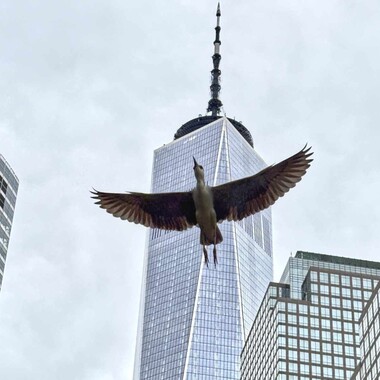
Black-crowned Night Heron in flight in downtown Manhattan. Photo: NYC Bird Alliance
KEEP BLACK-CROWNED NIGHT HERON IN NYC
One of New York-New Jersey Harbor's signature birds is disappearing. We have until 2037 to keep it here.
Drawing on more than 40 years of nesting survey data in New York-New Jersey Harbor, NYC Bird Alliance scientists have published peer-reviewed evidence that the population of Black-crowned Night Heron, historically the most abundant wading bird in the harbor, has fallen 55% in 22 years.
Without conservation action, it could be lost from the harbor as soon as 2037. You can help now:
MEET THE BLACK-CROWNED NIGHT HERON
Though most New Yorkers likely have never noticed this bird before, the Black-crowned Night Heron prefers it that way. In classic New York fashion, this grumpy-looking wading bird keeps late hours and sticks to its familiar haunts – the kind of New Yorker who knows exactly where to eat at midnight but won’t tell anyone about the spot.
Every night at dusk the Black-crowned Night Heron (BCNH) leaves its harbor island, spreading out across the City to hunt – standing motionless at the water's edge until a fish or a crab delivers itself to this patient nocturnal hunter. By morning it has returned to one of a handful of small wild islands where it nests alongside nine other wading bird species, including Great Blue Herons and Great Egrets.
For most of the 40+ years NYC Bird Alliance has been tracking harbor wading birds, BCNH has been the most abundant species, but often the least noticed by New Yorkers. That is about to change.
.jpeg) "}" data-trix-content-type="undefined" class="attachment attachment--content">
"}" data-trix-content-type="undefined" class="attachment attachment--content"> WHAT OUR RESEARCH REVEALED
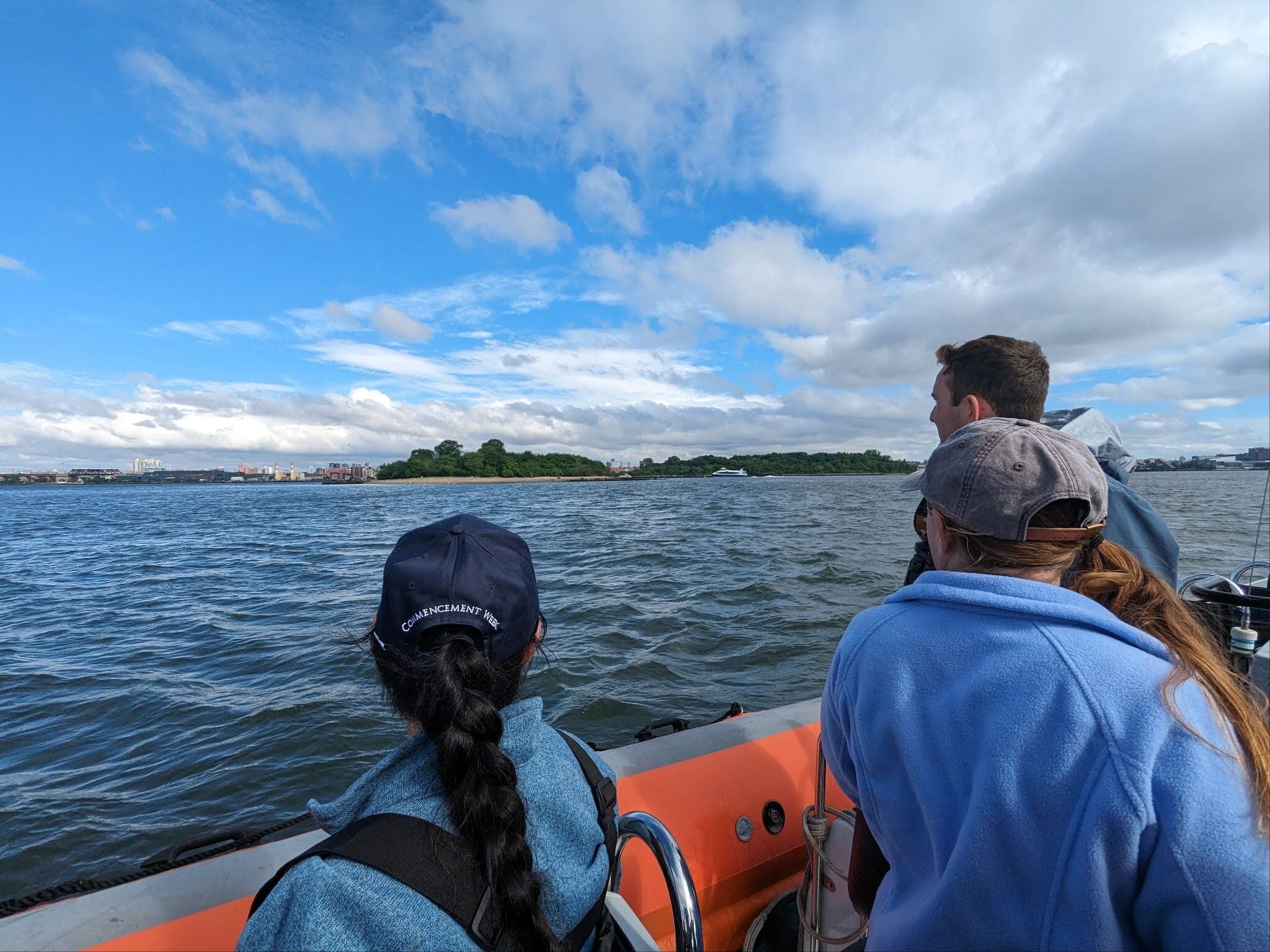
For over four decades, NYC Bird Alliance scientists and more than 100 trained volunteers have counted every wading bird nest on every island in New York–New Jersey Harbor, the longest continuous wading bird dataset in the Northeast. What it shows is hard to look away from: Black-crowned Night Heron populations have fallen 55% in 22 years, dragging the broader harbor wading bird community down 27% with it – a rate that exceeds average North American bird declines.
Without intervention, our analysis projects the Black-crowned Night Heron could be lost from NY–NJ Harbor as soon as 2037. Even the most conservative projection method places the loss within the lifetimes of most New Yorkers.
Read the full peer-reviewed paper in Conservation Science and Practice.
 "}" data-trix-content-type="undefined" class="attachment attachment--content">
 A WARNING SIGN FOR THE WHOLE HARBOR
The Black-crowned Night Heron is the harbor's canary in the coal mine. As a top predator that eats across nearly every habitat the harbor has to offer, its health is a reading on the whole system: the water New Yorkers swim and fish in, the marshes that buffer our shoreline from storms, the interconnected web of life that makes New York Harbor one of the great urban estuaries in the world.
The stakes of losing this colony extend across the region. Given NY–NJ Harbor is their largest nesting spot in the Northeast, the Black-crowned Night Heron population disappearing here could put the species' future across New York State and the Atlantic region in jeopardy.
We Have Time To Save Black-crowned Night Heron
NYC Bird Alliance is calling for a coordinated response built on four pillars.
STATE PROTECTION
List the Black-crowned Night Heron as threatened or endangered in New York State. The species is already listed as endangered in Maine and Pennsylvania and threatened in New Jersey. New York, where the Northeast's largest population persists, has no listing.
ACTIVE MANAGEMENT AND PROTECTION OF COLONY SITES
We call on state and local agencies to reduce predation and human disturbance on the harbor islands that can support colonies through more active management.
PRIORITIZE RESTORATION OF FORAGING SITES
Black-crowned Night Herons forage across nearly every habitat the harbor offers – marshes, mudflats, creek edges, and urban waterways. Restoring these sites support not just the night heron but the broader climate resilience and biodiversity that depends on a healthy harbor.
CONTINUED SCIENTIFIC ANALYSIS
We call on NYS to commit to sustained, funded long-term research: we know the Black-crowned Night Heron is declining, but the specific drivers – whether predation, contaminants, disturbance, or some combination – are not yet fully understood. Research is essential to ensuring that conservation interventions are targeted, effective, and measurable.
HELP US KEEP THE NIGHT HERON IN NYC
We have just over a decade to keep this bird in New York Harbor. Here is how you can help:

SIGN OUR PETITION
Sign our petition calling on NYC Parks and the New York State Department of Environmental Conservation to fund dedicated research into the causes of this bird's decline and strengthen protections for the harbor islands where it nests.

SHARE YOUR BLACK-CROWNED NIGHT HERON STORY
Your story is part of our advocacy. Tell us why the Black-crowned Night Heron matters to you through the form below, by emailing bcnh@nycbirdalliance.org, or on social media using #nycnightheron and tagging @nycbirdalliance. The more New Yorkers who speak up, the stronger our case to the decision-makers who can help protect this bird.

SIGN UP FOR ACTION ALERTS
Saving this species will take sustained public pressure on the decision-makers who can protect it. Sign up for NYC Bird Alliance's Avian Advocates list and we will let you know when the moment to act arrives.

SUPPORT OUR FIGHT TO SAVE THE NIGHT HERON
The Black-crowned Night Heron's survival depends on sustained science, strong advocacy, and a public that refuses to look away. Your support makes all three possible.
Support for this Conservation Effort
The research behind this page was conducted by NYC Bird Alliance and published in Conservation Science and Practice. The Harbor Herons program is supported by Hudson River Foundation, Robert F. Schumann Foundation, Jeniam Foundation, Sarah K. de Coizart Article TENTH Perpetual Charitable Trust, and Elizabeth Woods and Charles Denholm